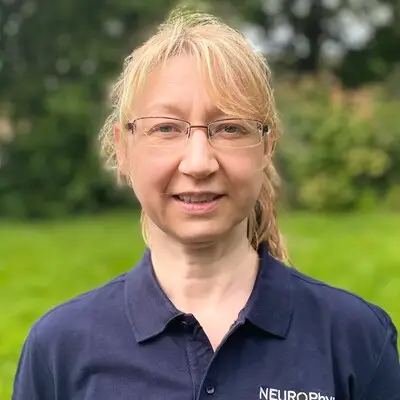
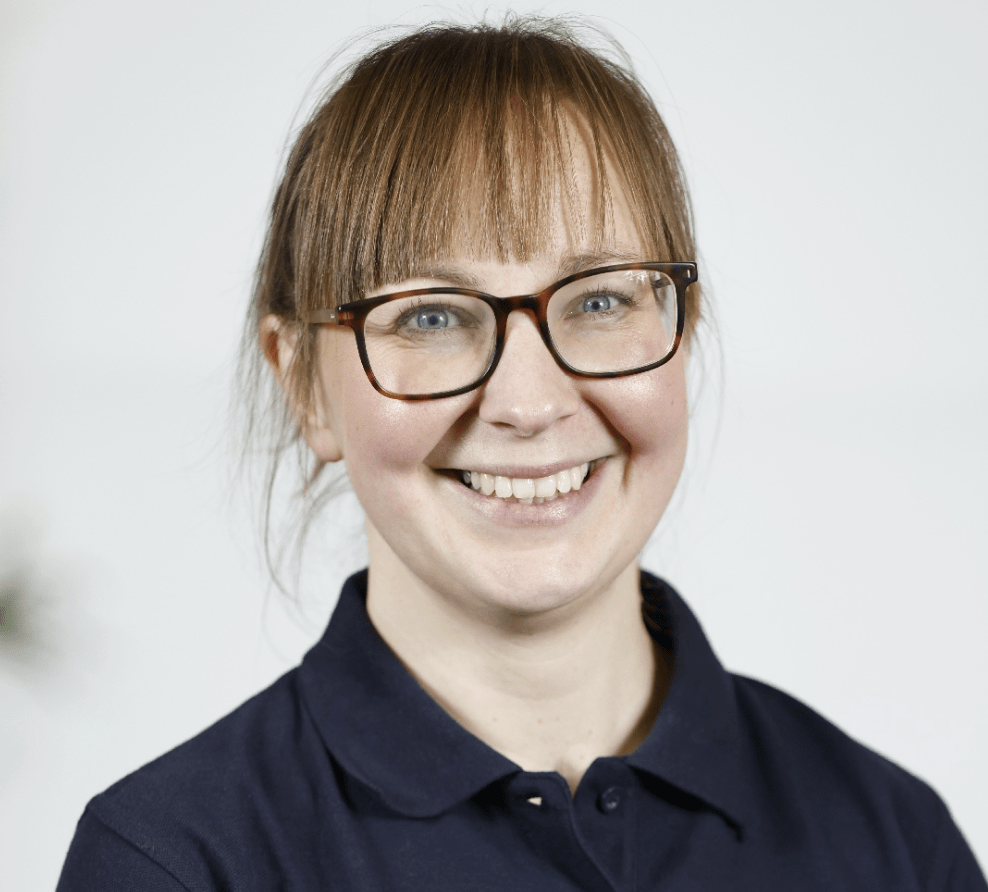
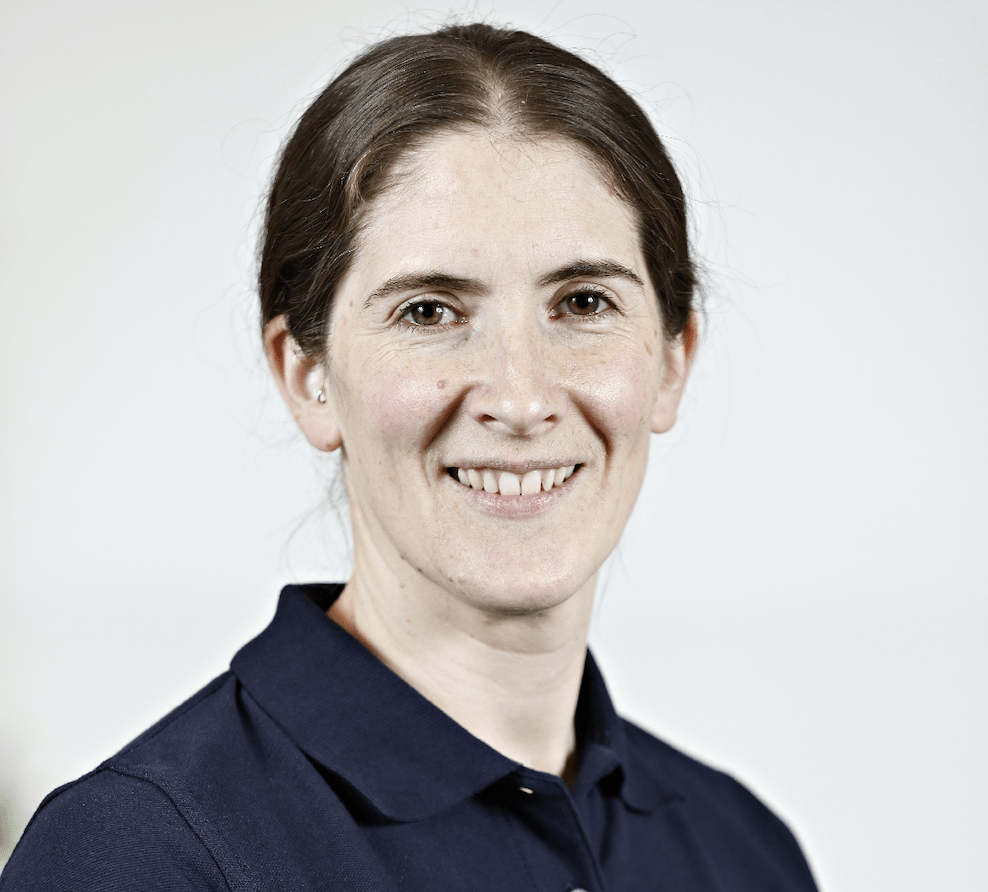
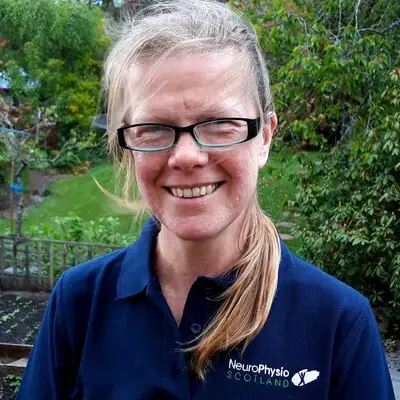
Good lifestyle choices with stretching and strengthening exercises are the starting point for treatment. We’ll guide you through the process of getting fitter and stronger.
MS is a disease that affects nerves in the brain and the spinal cord. There’s still a lot we don’t know about MS but it is thought to be an auto-immune disease, where the body’s own immune system starts to attack the nerves. This interferes with the electrical signals that travel along your nerves and can cause a huge variety of symptoms. It’s one of the most common causes of disability in young adults.
Common challenges with multiple sclerosis
MS can cause a wide range of symptoms; people often experience problems with vision, arm or leg weakness, sensation and balance. Fatigue, heat sensitivity, and foot drop are other common symptoms.
How we can help
Early after diagnosis, treatment often involves guiding good lifestyle choices as well as specific interventions such as stretching or strengthening exercises. There is emerging evidence about higher intensity exercise for MS and how that can be used to strengthen the connection between the brain and different muscle groups. Our expert team will guide you through the process of getting fitter and becoming resilient.
For people with more significant challenges, we can provide treatment focused on stretching, getting into comfortable positions, standing routines, bed mobility and transfers. Sometimes just having easy access to an experienced ear can help guide your decisions about how best to manage different problems when they arise. Whatever the situation, we can assess the situation then design and implement a plan to maximise function and independence.
Rehabilitation technology
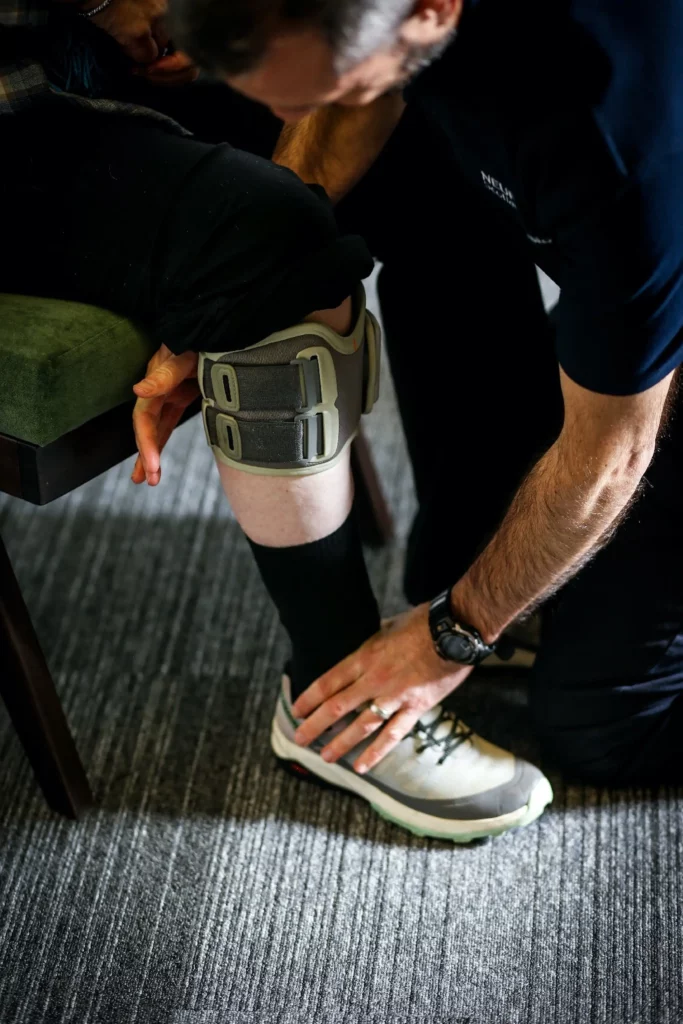
If you have fatiguable foot drop or something else affecting your walking, you might want to see if Functional Electrical Stimulation (FES) could help. It is a popular solution for people with MS and we have some of the latest devices available to trial that can help you trip less and walk further with less effort.
I have been the fortunate recipient of expert and professional physiotherapy from Ali and Katy following a stroke. They are professional and compassionate, very expert and great fun; their expertise and appointments have been both necessary and a delight. I would recommend this firm very highly and without reserve, and their staff are deserving of the highest praise.
Kenneth Walker
I’ve been working with Kenny for around five years, initially for surgical rehabilitation and then for ongoing mild cerebral palsy. He has been so encouraging and supportive throughout. He regularly changes my programme to keep me motivated and always pushes me to be my physical and functional best. I’ve seen huge changes since we started working together!
Kathleen McNish
Bob was in a very poor condition when Catriona came to see us, and he is making very good progress. Catriona is always positive and in just a few weeks has made a big difference in Bob’s life, and we can’t thank her enough for all her help.
Christine Chrystal
This company has helped me regain much more of my balance and core strength lost in the first lockdown. Through weekly visits, with plenty of exercises to do daily in between, I have come a long way to regaining core strength and balance. Thank you to a wonderful specialist physiotherapist that makes each visit to give me more confidence.
Bernadette Hendry
Tracey is always pleasant, considerate, and obviously a dedicated first-class therapist. She has done a great deal for my wife’s condition (disability and tremor following a stroke), not least for her morale. She gives great encouragement. Her visits have become friendly occasions for my wife, who frequently asks when Tracey is coming back.
Tom Brown
NeuroPhysio has been absolutely fantastic with the help and support provided to my mum. Her confidence has grown, she is stronger and making amazing progress. Thank you to Emma for always making time available to talk things through, the patience and also the persistence to get the best outcome.
We’re so sorry to hear that you aren’t happy with our service. Your feedback is really important to us and we do all we can to make sure we are constantly improving.
Please leave your feedback for us below and we’ll get back to you to see what we can do to resolve any issues you may have.
Write Your Review
We’re so sorry to hear that you aren’t happy with our service. Your feedback is really important to us and we do all we can to make sure we are constantly improving.
Please leave your feedback for us below and we’ll get back to you to see what we can do to resolve any issues you may have.
Write Your Review
We’re so sorry to hear that you aren’t happy with our service. Your feedback is really important to us and we do all we can to make sure we are constantly improving.
Please leave your feedback for us below and we’ll get back to you to see what we can do to resolve any issues you may have.